
Taking care of your health on a daily basis doesn’t require a complete overhaul all at once. A few targeted adjustments, maintained over time, produce measurable effects on energy, sleep, and the overall balance of the body. However, it’s important to know which ones truly deserve your attention, and which are generic advice with no real impact.
My prevention check-up: the free health appointment that few French people use
Recently, a program called “My prevention check-up” allows French citizens to benefit from a free and personalized appointment at several key ages: 18-25 years, 45-50 years, 60-65 years, and 70-75 years. This appointment takes place with a doctor, pharmacist, nurse, midwife, or physiotherapist.
The discussion covers sleep, nutrition, physical activity, mental health, vaccinations, and screenings. This is not just a simple blood test: it is an assessment tailored to your individual risks.
Most articles on daily health focus on personal habits. They overlook this organized prevention component. A structured appointment can detect problems you might not suspect, even with a correct lifestyle.
To delve deeper into topics related to health on On ne m’avait pas dit que, numerous resources effectively complement this type of preventive approach.
Organized screenings: appointments not to miss
Adopting good habits does not replace screenings. Breast cancer and colorectal cancer are subject to screening programs offered at regular intervals for the concerned adults. The cervical cancer screening varies depending on age and the test used.
A screening detects an anomaly before symptoms appear. At this stage, treatments are often simpler and more effective. Ignoring these appointments means losing a concrete advantage that the French healthcare system provides for free.
Have you ever noticed that the invitation letters for screenings often end up in a drawer? It’s a common reflex, but each letter corresponds to a specific age group where the risk justifies an examination. Taking the time to respond is one of the most cost-effective health prevention actions.
Sleep and natural light: two underestimated levers
Sleep is often reduced to vague advice (“get enough sleep”). In practice, the regularity of your bedtime matters as much as the duration. Going to bed and waking up at similar times each day, including on weekends, stabilizes the circadian rhythm.
Exposure to natural light in the morning plays a direct role in this rhythm. Working near a window or going outside for a few minutes after waking helps regulate melatonin production. Conversely, screens emit blue light that disrupts falling asleep when used late at night.
On this subject, French regulations evolved in 2025. Since the decree of June 27, 2025, nurseries are no longer allowed to expose children under 3 years old to screens. This collective framework reflects a growing awareness that goes beyond simple parental advice.
For adults, the practical rule remains simple: limit screens at least one hour before bedtime and prefer a soft light source in the evening.
Nutrition and hydration: what really makes a difference

There is an abundance of dietary recommendations. Among them, a few principles produce concrete effects without requiring complex calculations:
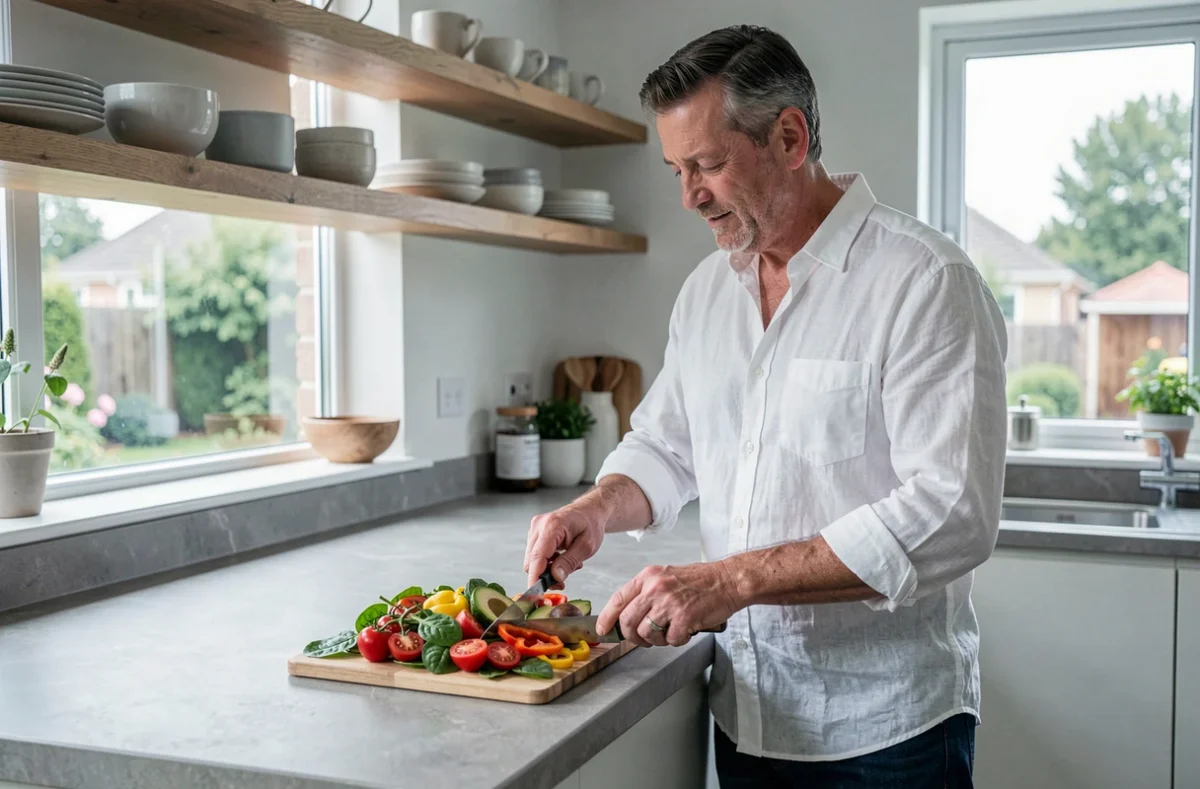
- Favor fruits, vegetables, whole grains, and fatty fish over ultra-processed products high in salt, sugar, and saturated fats
- Drink water regularly throughout the day, without waiting for thirst, which often comes too late
- Vary protein sources by alternating meat, fish, legumes, and eggs throughout the week
Consistency outweighs perfection. A rich meal or an occasional indulgence does not negate weeks of balanced eating. What degrades health is the daily repetition of unbalanced choices over months.
Why is this point worth emphasizing? Because food guilt sometimes leads to restrictive diets, which generate stress and deficiencies. A sustainable balance is always better than intense restriction followed by abandonment.
Physical activity and stress management: the duo that protects the body
Physical activity is not just for maintaining a stable weight. It directly affects stress, sleep, and cardiovascular health. Regularity is more important than intensity: walking every day produces more long-term effects than a violent effort once a week.
Here are some concrete tips to integrate movement without excessive strain:
- Walk for short trips instead of taking the car or public transport
- Take the stairs whenever possible
- Engage in an activity you enjoy (cycling, swimming, gardening) rather than a sport you abandon after three weeks
- Move for a few minutes every hour if you work seated
Regarding stress, identifying your personal triggers is more useful than any generic relaxation advice. Chronic stress affects sleep, nutrition, and energy. Unmanaged mental load eventually deteriorates overall lifestyle hygiene.
Daily health relies less on spectacular actions than on modest choices repeated consistently. Taking advantage of preventive measures like My prevention check-up, responding to screening letters, stabilizing your sleep, and moving regularly: these four areas cover the essentials of what is truly actionable. The rest is often just noise.