
A perennial bed installed in October will survive the following summer without supplemental watering, while the same bed planted in April will require watering every three days starting in June. This shift of a few months in the calendar radically changes the maintenance load of a garden. Creating and maintaining a thriving garden relies less on an accumulation of tasks and more on good timing and a few structural choices applied to the soil, plantings, and water management.
Planting in autumn for a drought-resistant garden
Since the repeated heat waves, the logic has shifted: planting is preferably done in autumn. The still-warm soil and regular rains allow roots to penetrate deeply for several months before the first water stress.
A shrub or perennial planted in September-October develops a significantly more extensive root system than one planted in spring. The result: less watering in summer and better establishment.
You can find out everything about Perspectives Jardin to identify species suited to your soil and exposure before embarking on an autumn planting campaign.
For trees and hedges, the ideal window is between mid-October and the end of November, avoiding frost. Bare-root roses follow the same window. Only frost-sensitive plants (citrus, certain exotic grasses) justify a spring installation, with close watering supervision in the first year.
Living soil and mulching: the foundation of reduced maintenance
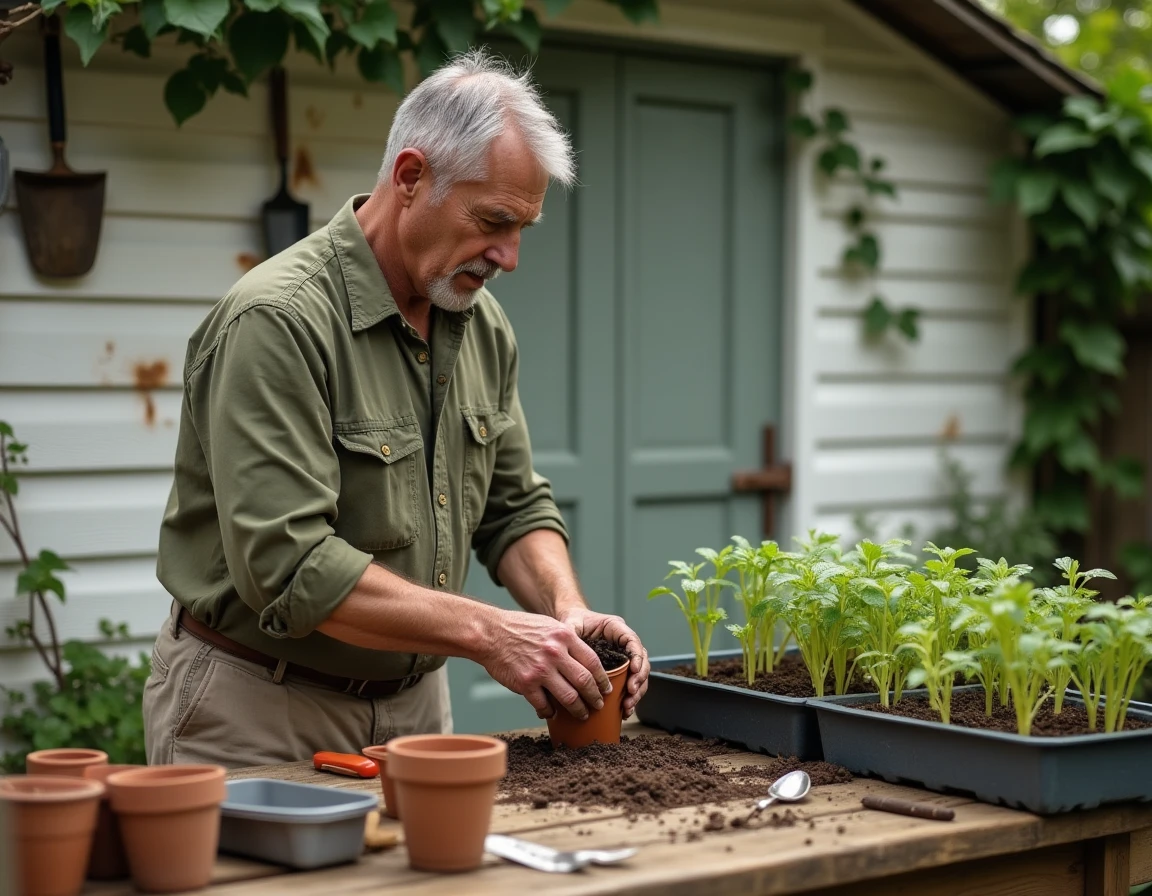
Before discussing plants, we talk about soil. Compacted, bare, or impoverished soil generates more work than covered and biologically active soil. Mulching is not a decorative accessory; it is the main lever to reduce weeding, limit evaporation, and nourish the soil.
Which mulch to choose according to the beds
- Wood chip mulch (BRF) is suitable for shrub beds and hedges: it decomposes slowly and enriches the soil with stable humus.
- Straw or dried grass clippings work well in the vegetable garden, where they are renewed more often due to crop rotation.
- Cocoa shells or pine bark are used in acid soil beds (hydrangeas, rhododendrons), but be careful not to use them on calcicole plants.
- Minerals (gravel, pumice) are suitable for dry gardens and Mediterranean plants that fear stagnant moisture at the collar.
A thick enough layer should be spread to block light at the soil level. A layer that is too thin allows weeds to pass through and blows away at the first gust of wind. Feedback varies on the ideal thickness depending on the materials, but we generally aim for the width of a hand.
Garden watering: less often, deeper
The most common mistake is to water a little every evening. This practice keeps roots near the surface and makes plants dependent on daily watering. A generous but spaced watering forces roots to go down to seek residual moisture in the deeper layers of the soil.
In practice, water abundantly once or twice a week rather than lightly every day. The finger test, inserting it into the soil five centimeters deep, allows you to check if the soil is still moist before getting the hose out.
Timers and moisture probes
Automatic drip irrigation systems, combined with moisture probes, allow watering only when the soil truly requires it. This type of installation avoids waste associated with fixed hourly programming, which triggers watering even after rain.
After winter, always check the connections and emitters: post-freeze leaks are a frequent cause of excessive water consumption in spring. A visual check circuit by circuit takes half an hour and prevents weeks of silent waste.
Lawn and bed maintenance throughout the seasons
The lawn often monopolizes attention at the expense of the beds. You save time by accepting that the grass is not a golf green. A high mowing (seven to eight centimeters) strengthens the grass, limits weed growth, and reduces mowing frequency.
Lawn scarification and fertilization
Scarification in early spring loosens the root mat that suffocates the lawn. This is also a good time to apply a slow-release organic fertilizer. This duo, done once a year, produces more results than a dozen close mowings.
Pruning shrubs and hedges
Each species has its pruning window. Spring-flowering shrubs (forsythia, lilac) are pruned just after flowering. Those that bloom in summer (buddleia, hibiscus) are pruned at the end of winter.
- Evergreen hedges are pruned twice a year: at the end of June and the end of September.
- Pome fruit trees are pruned in winter, stone fruit trees after harvest.
- Ornamental grasses are cut back in March, before the resumption of growth.
Pruning at the wrong time removes the year’s flowering, which is the most common disappointment among novice gardeners.
Local plants and biodiversity in the garden
Incorporating native plants into garden design significantly reduces maintenance load. These species, adapted to the local climate and soil, require less watering, fewer treatments, and attract pollinators.
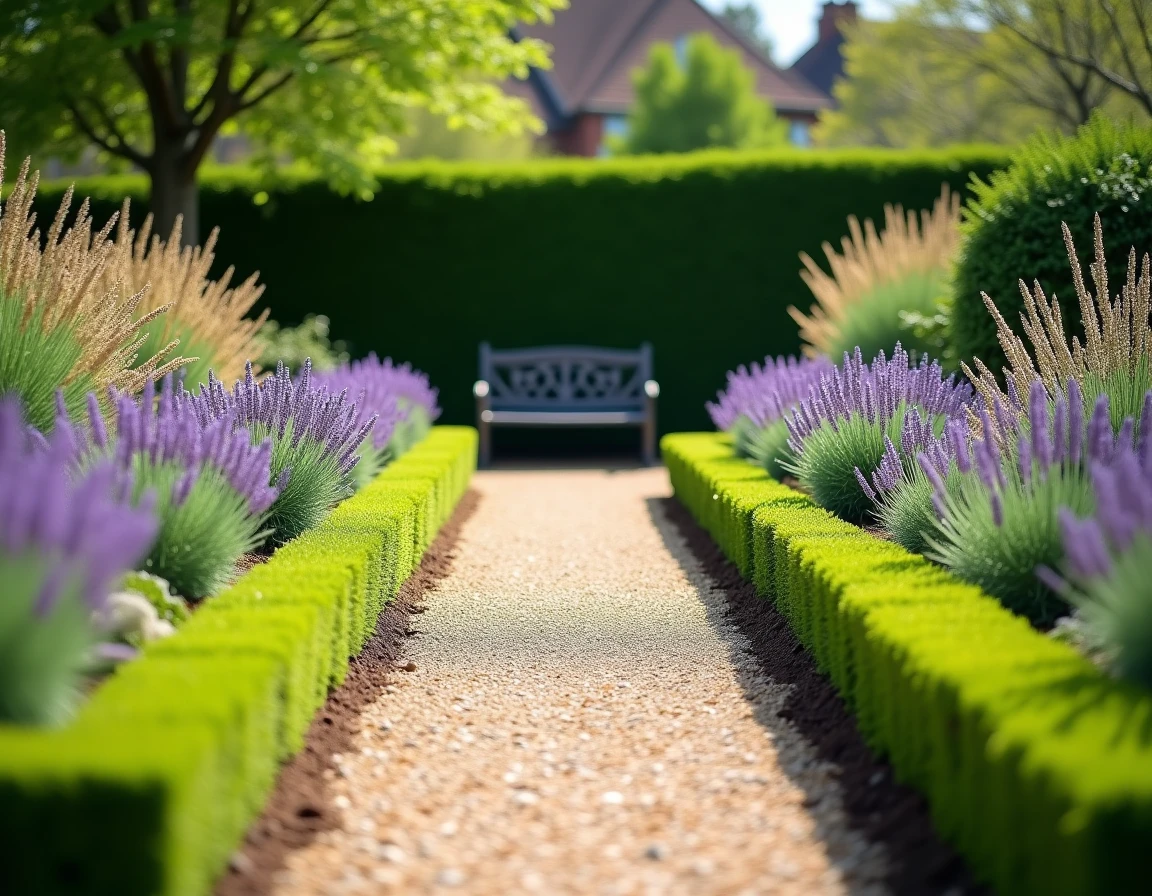
A bed composed of sages, yarrow, and echinacea, for example, remains in bloom from June to October with minimal maintenance. You can add grasses for volume and movement without extra chores.
Combining ground-cover perennials and structural shrubs creates dense spaces where weeds struggle to establish. This is the best alternative to repetitive weeding: occupying the ground before the weeds.
A thriving garden is not just a list of weekly tasks. The choices made in advance (planting period, soil coverage, suitable species) determine the workload for the following years. It’s better to spend time preparing the soil and choosing the right plants than to compensate later with constant watering and treatments.