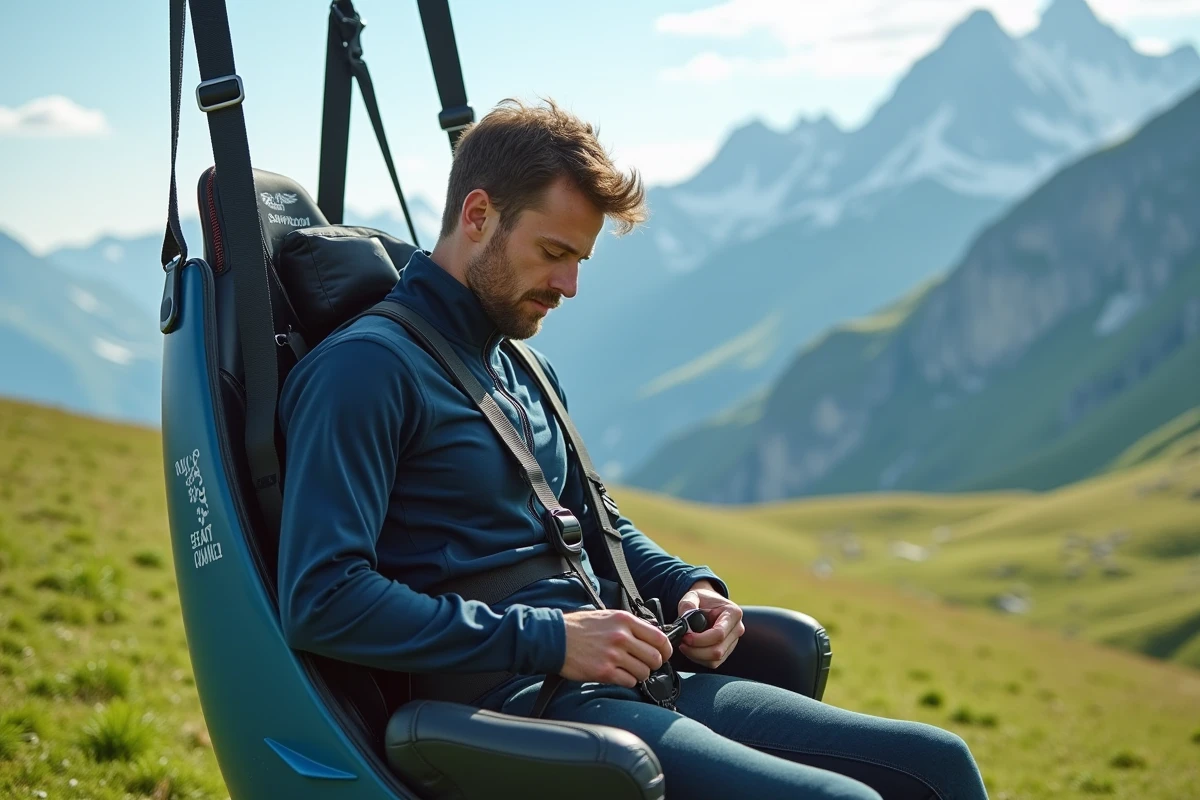
The Nervures AirTrek 2 paragliding harness is presented as a versatile reversible option, designed for hike-and-fly and learning. Its position regarding passive safety compared to other types of harnesses deserves careful examination. The safety reports from the FFVL (2022-2024) provide useful insights into what a mid-range reversible harness actually protects against and its limitations.
Passive Safety of Reversible Harnesses: What the FFVL Reports Show
The accident analyses published by the FFVL in its 2022-2024 safety reports clearly distinguish the levels of protection according to the harness category. For beginner hike-and-fly pilots, reversible harnesses offer sufficient passive safety in low-energy incidents. Falls during takeoff, light contacts with the terrain during landing: the back foam and integrated protection absorb these common shocks.
However, in the case of more violent impacts (collision with an obstacle, stall near the ground), these same reversible harnesses remain less protective than cocoon or hybrid harnesses equipped with thick back protections. The AirTrek 2 features an active pre-inflated protection from takeoff, placing it among the best-equipped reversibles in its category. The commercial descriptions do not explicitly position this harness within this gradation, which may leave a beginner pilot without a clear reference.
A technical point to remember before choosing: a reversible harness provides good protection in regular use, but less so in high-energy impacts. This is not a flaw specific to the AirTrek 2; it is a characteristic of the category.
To delve deeper into the specifications of this model, the Nervures paragliding harness on L’Esprit du Sport details its technical characteristics and positioning.
Compatibility of Reserve Parachute and AirTrek 2 Harness: An Often Overlooked Angle
The issue of integrating a reserve parachute into a reversible harness deserves special attention. Feedback from the field shared on specialized forums and presentations of beginner packs highlight a recurring problem: not all reversibles manage modern ultralight or steerable reserves equally well.
Three points determine the reliability of extraction in real situations:
- The position of the reserve handle and its accessibility with the thigh straps tightened, including under G-load in a spiral.
- The volume of the reserve pocket, which must accommodate recent parachutes (more compact but sometimes stiffer when folded) without forcing the closure.
- The smoothness of pod extraction, which must be tested under a frame before the first flight, as noted in the Nervures manual.
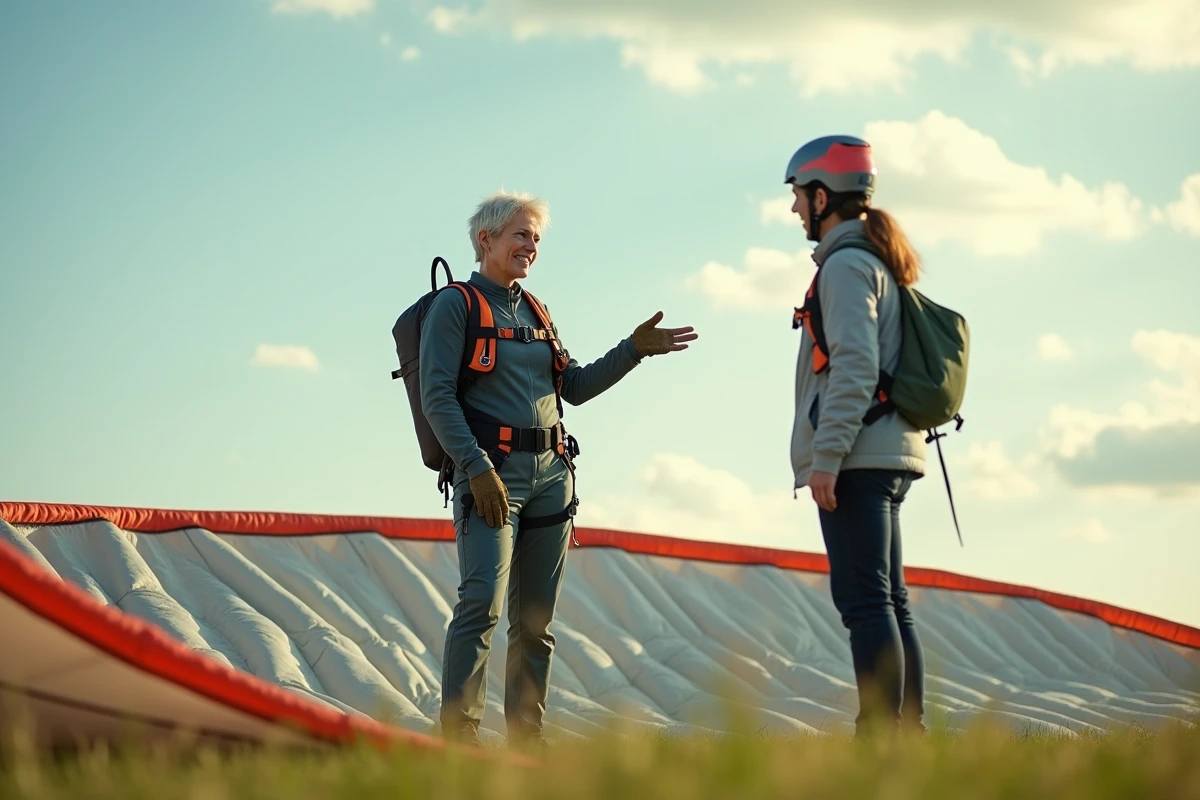
The official manual for the AirTrek 2 emphasizes the extraction test under a frame and describes the step-by-step assembly. This is a good point. The commercial descriptions do not specify which models of reserve parachutes have been tested and validated with this specific pocket. A pilot purchasing a recent steerable reserve has no guarantee of dimensional compatibility without a physical trial.
Reversible Paragliding Harness and Hike-and-Fly Practice: Criteria Table
The AirTrek 2 explicitly targets hike-and-fly practice thanks to its reversible function (harness convertible into a backpack). To assess its relevance for this use, here are the criteria that truly matter, compared across the major categories of available harnesses.
| Criterion | Reversible (type AirTrek 2) | Light non-reversible harness | Cocoon / hybrid |
|---|---|---|---|
| Transformation into a backpack | Yes, integrated | No (separate bag) | No |
| Pre-inflated back protection | Yes | Variable (often thin foam) | Yes (thick) |
| High-energy protection | Limited | Low | High |
| Reserve pocket volume | Medium | Compact | Large |
| Comfort in long flights | Fair | Limited | Optimal |
| Suitable for carrying in the mountains | Good | Very good | Poor |
The reversible harness represents the best compromise for hike-and-fly, provided one accepts its limitations in passive protection. The choice is between portability and level of protection, depending on the intended use and terrain.
Interaction with Lightweight Wings: Stability in Flight and Handling
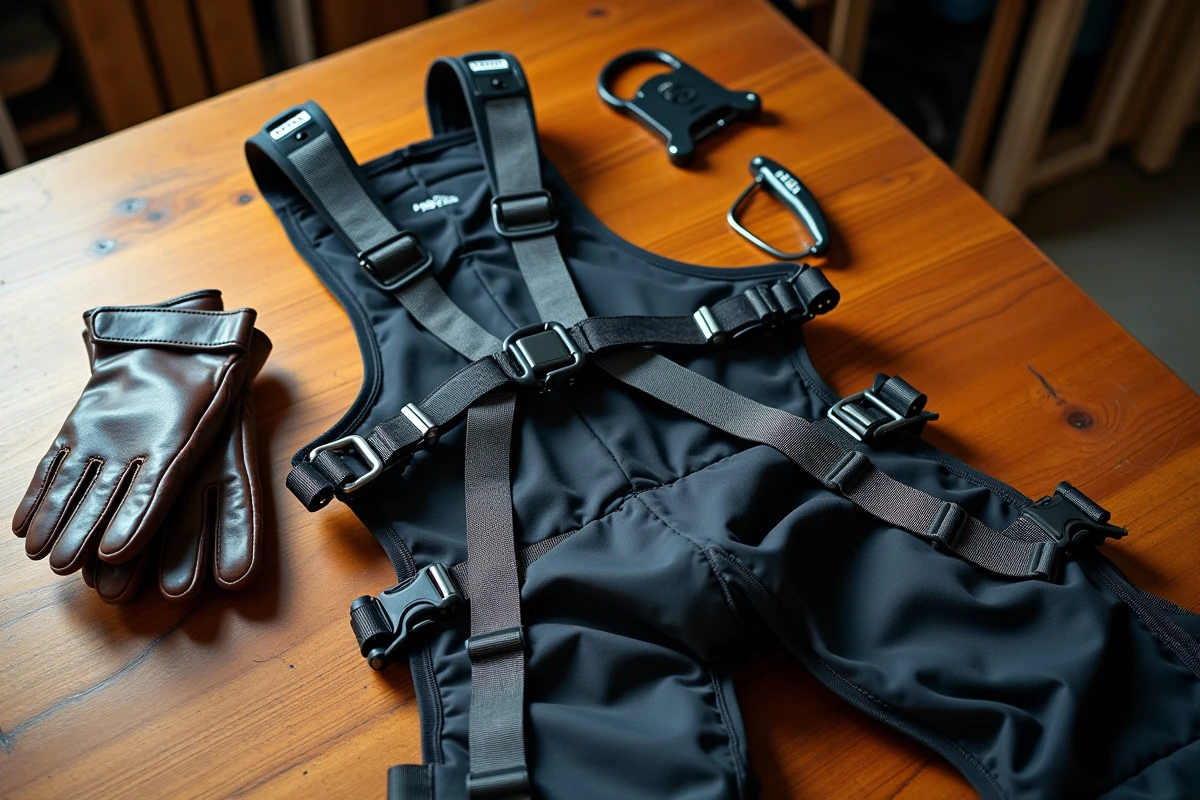
In hike-and-fly practice, the AirTrek 2 is generally combined with light or ultralight wings, designed to reduce the total weight of the pack. This combination raises a question of stability that commercial descriptions do not address.
A reversible harness offers less inertia than a cocoon. When paired with a light wing (whose profile reacts more quickly to turbulence), the pilot perceives air movements more acutely. For a beginner, this can translate into a feeling of instability in thermal conditions, even moderate ones.
The adjustment of the harness partially compensates for this effect. The AirTrek 2 manual details the possible adjustments: spacing of anchor points, tension of the seat, and adjustment of the ventral straps. A poor adjustment degrades stability much more than the choice of the harness model itself.
Pilots who regularly fly in calm conditions (morning flights, coastal soaring) will not have difficulty. Those aiming for thermal flights in the mountains in the afternoon will benefit from mastering the adjustments under a frame before taking off in active conditions.
Nervures AirTrek 2 Harness: For Which Pilot Profile
The AirTrek 2 is not a universal harness, and that is precisely what makes it relevant for targeted use. It is aimed at beginner to intermediate pilots who practice hike-and-fly and seek a unique piece of equipment for carrying and flying.
An experienced pilot who frequently crosses in strong thermals will find the passive protection insufficient for their level of exposure. An occasional hiker who flies in calm conditions will have an adequate level of safety for their use.
The pre-inflated protection at takeoff, functional reversibility, and compatibility with Nervures accessories (accelerator, footrest) form a coherent set. The point of caution remains the integration of the reserve: physically checking compatibility with the chosen parachute model and performing the extraction test under a frame are not options but prerequisites for the first flight.