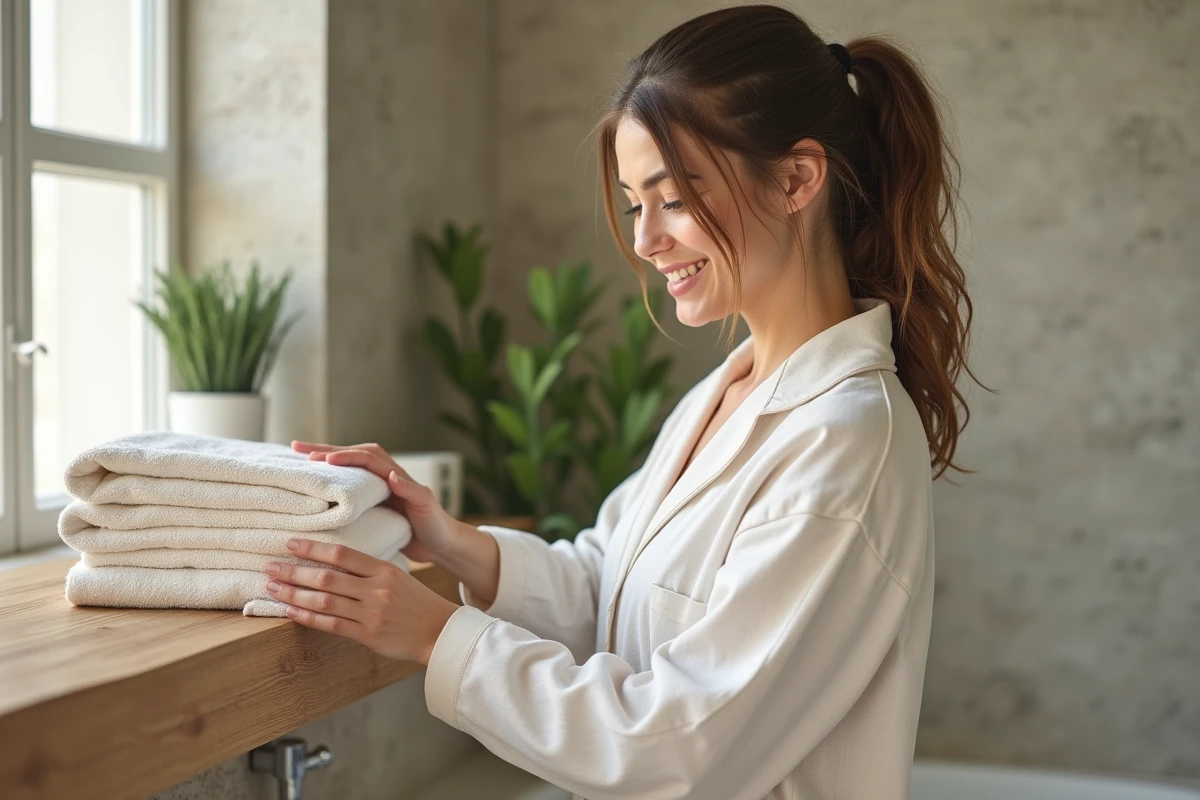
Certified organic natural fibers still represent only a small share of the global textile market. However, demand is growing at a steady pace, driven by increased vigilance regarding the origin of materials and manufacturing processes. The GOTS certification, essential yet demanding, does not systematically guarantee the absence of controversial substances, creating ambiguity for the attentive consumer.
Alongside regulated sectors, some producers continue traditional cotton cultivation methods, sometimes without chemical fertilizers, but outside any official label. Another variable then comes into play: daily care and the longevity of textiles, two criteria that weigh increasingly heavily in the balance when it comes to choosing home linens.
Organic cotton bed linen: understanding its specifics and labels
Organic cotton bed linen transforms the bedroom into a place where one breathes better, but it also raises a fundamental question: that of traceability. Behind the softness of a cotton duvet cover, there is more than just a tactile gentleness. There is the pursuit of a controlled fiber, the hunt for undesirable substances, and the meticulous selection of processes. Choosing a bed set in organic cotton means paying attention to its labels: Oeko-Tex, GOTS, Ecocert. Each has its own criteria, but not all are equal.
Oeko-Tex guarantees that the finished product does not contain undesirable substances for health, without certifying the organic origin of the cotton. Conversely, the GOTS label certifies both an organic fiber and overall compliance with social and environmental standards, from field to cover. Ecocert, for its part, verifies the integrity and traceability of the material, providing additional security, especially for organic cotton bed linen.
The choice of weaving also comes into play. Percale cotton, known for its durability and fineness, is prominent in high-end household linen ranges. A tight weave, with at least 80 threads/cm², ensures softness, robustness, and stable colors wash after wash. Opting for a 100% organic cotton composition, without blends, also reinforces the ecological coherence of the product.
At Pulpe de Coton, user feedback emphasizes the difference felt with quality organic linen. Fitted sheets, pillowcases, duvet covers: each well-chosen element contributes to an attentive domestic atmosphere, where health and ethics are no longer options.
What materials to choose for healthy and environmentally friendly sleep?
The material of bed linen influences rest as much as ecological impact. Organic cotton, with its natural softness and ability to let the skin breathe, stands out due to the absence of chemical residues from conventional agriculture. A certified bed set in organic cotton minimizes allergy risks, proves ideal for sensitive skin, and fully aligns with a responsible choice approach.
Lin has its followers: a robust fiber, naturally thermoregulating and grown with few inputs, it keeps cool during warm nights and offers comfort in winter. Organic linen cotton combines the softness of cotton and the character of linen, for pleasant, sturdy, and durable linen.
Here are the main alternatives to consider based on needs and intended use:
- Organic cotton: soft feel, skin tolerance, easy maintenance.
- Linen: temperature regulation, local production, great longevity.
- Organic linen-cotton: a compromise between comfort, lightness, and resistance.
For bedding, it’s better to choose fitted sheets, pillowcases, or duvet covers made from these fabrics, without unnecessary chemical finishes. The references in organic fitted sheets or satin bed linen testify to the progress made in terms of well-being and respect for the environment. Organic cotton and linen thus form a new standard of comfort, faithful to demanding ecological values.
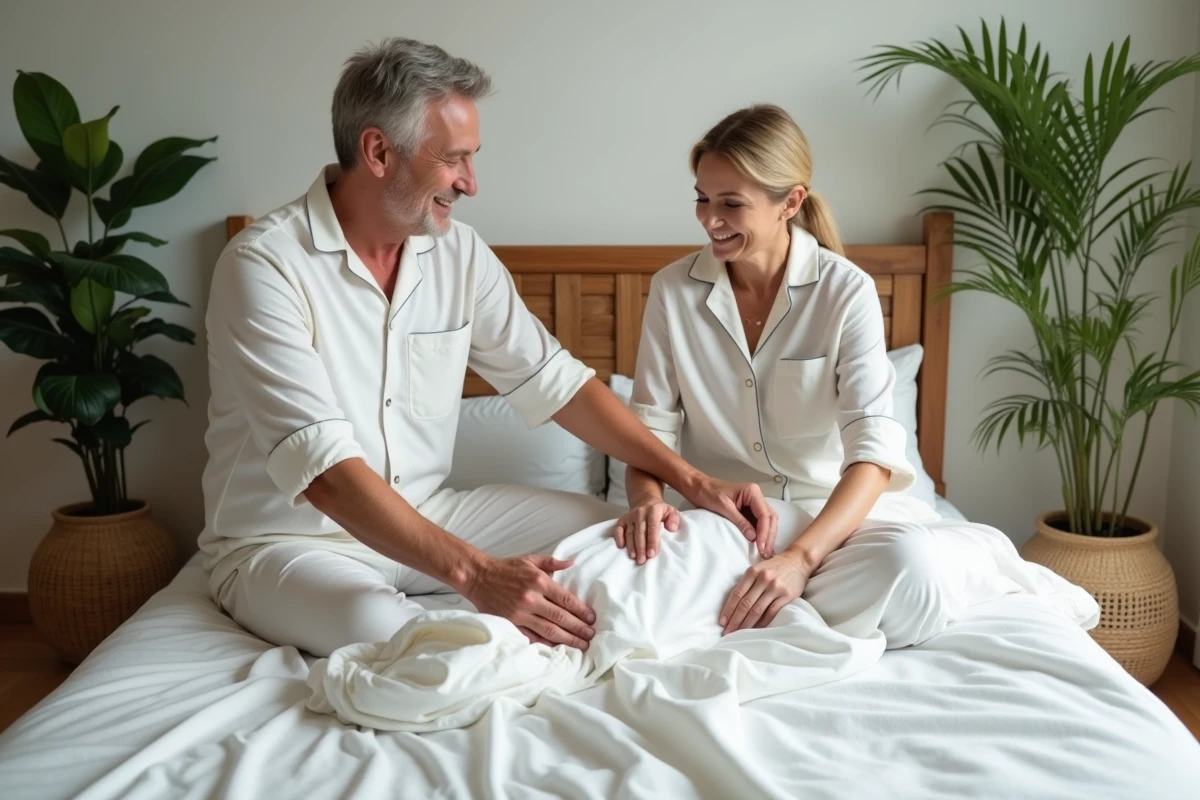
Practical tips for maintaining and sustainably adopting ecological home linen
Home linen made from organic cotton requires attention, but nothing insurmountable. It’s better to choose moderate maintenance: washing at a gentle temperature, using environmentally friendly detergent, air drying whenever possible. These simple gestures help preserve the quality of bed linen and the softness of natural fibers for a long time. An organic cotton fitted sheet or a duvet cover from organic farming requires regular vigilance, without heaviness, to remain soft and strong year after year.
Durability also plays a role upstream. It’s better to check the labels, true markers: GOTS, Oeko-Tex, Ecocert, which ensure that the product meets strict standards and that no questionable ingredient has slipped into the manufacturing chain. Prioritizing certified bed sets or pillowcases encourages a supply chain attentive to both the planet and our well-being.
To extend the life of your linen and preserve its appearance, a few simple practices are essential:
- Alternating covers and throws allows for spaced washes and avoids premature wear.
- Store cotton bed linen in a dry, ventilated place.
- Treat stains promptly, without resorting to aggressive bleaching agents.
Free delivery and secure payment facilitate access to sustainable choices, without compromising on comfort or aesthetics. Decor takes on its full meaning with organic bed linen: natural materials, soothing colors, precise finishes. Cultivating a healthy interior means progressing step by step, from each purchasing decision to the smallest maintenance gesture, so that the bedroom remains a refuge, and not just another room.