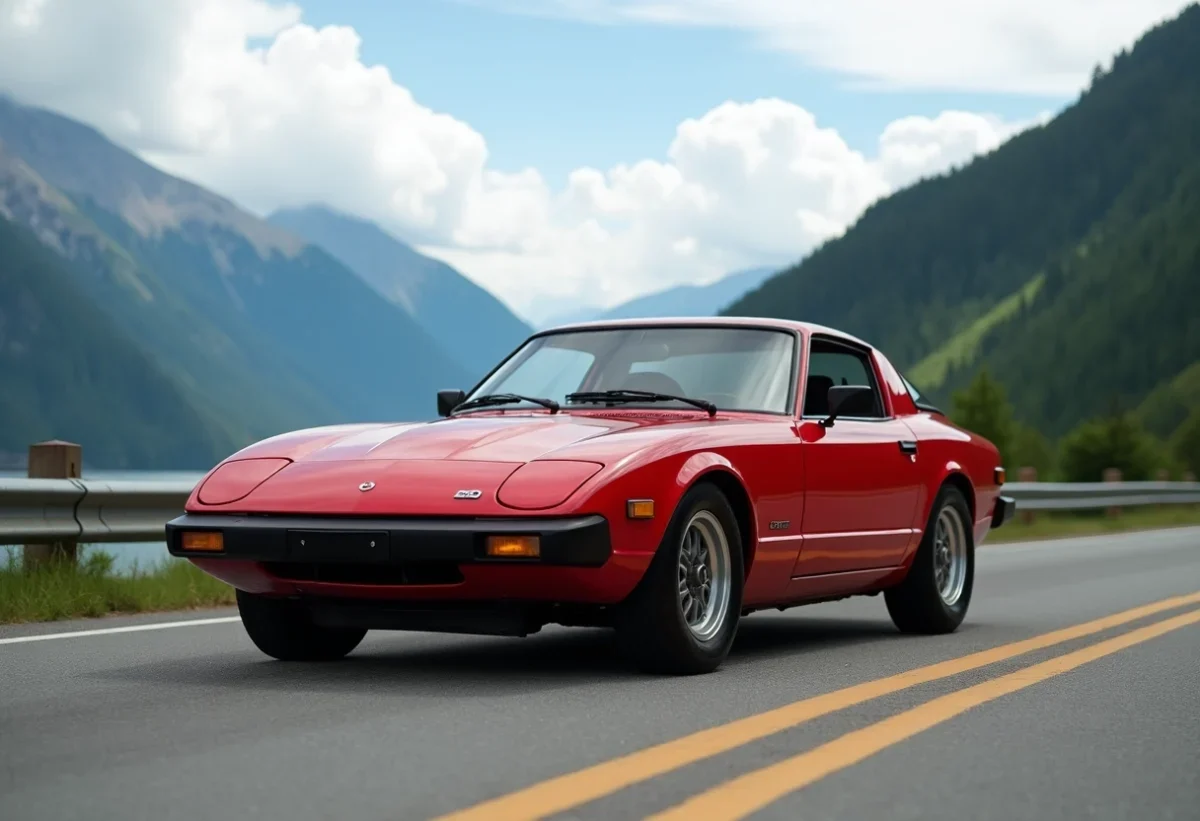
The RX7, a true icon of Japanese automotive history, has made a lasting impression since its launch in 1978. Designed by Mazda, this sports car distinguished itself with its bold design and impressive performance.
Equipped with a unique rotary engine, the RX7 offered an unparalleled driving experience, combining power and lightness. Its aerodynamic lines and agility quickly made it a favorite among thrill-seekers.
Over the generations, this car evolved, integrating cutting-edge technologies while maintaining its distinctive character. The RX7 remains today a symbol of passion and innovation in the automotive world.
History of the Mazda RX-7: From Promising Beginnings to Automotive Icon
The Mazda RX-7 was born in 1978 under the leadership of Kenichi Yamamoto, head of R&D at Mazda. The first generation, the Mazda RX-7 SA/FB, was equipped with the 12A engine, a rotary engine that quickly established the car’s reputation. This lightweight and high-performance engine allowed the RX7 car to stand out on the roads and tracks.
The Three Generations of the RX-7
- Mazda RX-7 SA/FB (1978-1985): first generation, equipped with the 12A engine.
- Mazda RX-7 FC (1986-1992): second generation, introducing the 13B engine.
- Mazda RX-7 FD (1992-2002): third generation, featuring the 13B-REW twin-turbo engine.
Each of these generations brought its share of innovations and improvements. The second generation, the Mazda RX-7 FC, benefited from an improved chassis and better aerodynamics. As for the third generation, the Mazda RX-7 FD, it offered even more impressive performance thanks to the introduction of the 13B-REW twin-turbo engine, further solidifying the RX7 car’s reputation as a benchmark in the world of sports cars.
A Divine Inspiration
Mazda, a name inspired by the Persian deity Ahura Mazda, has always sought to combine innovation and performance. Jujiro Matsuda, the company’s founder, laid the foundations of a philosophy that is reflected in every RX-7 model. The rotary engine, designed by Felix Wankel, was perfected by Mazda engineers under the direction of Kenichi Yamamoto, making the RX-7 both a revolutionary and iconic car. 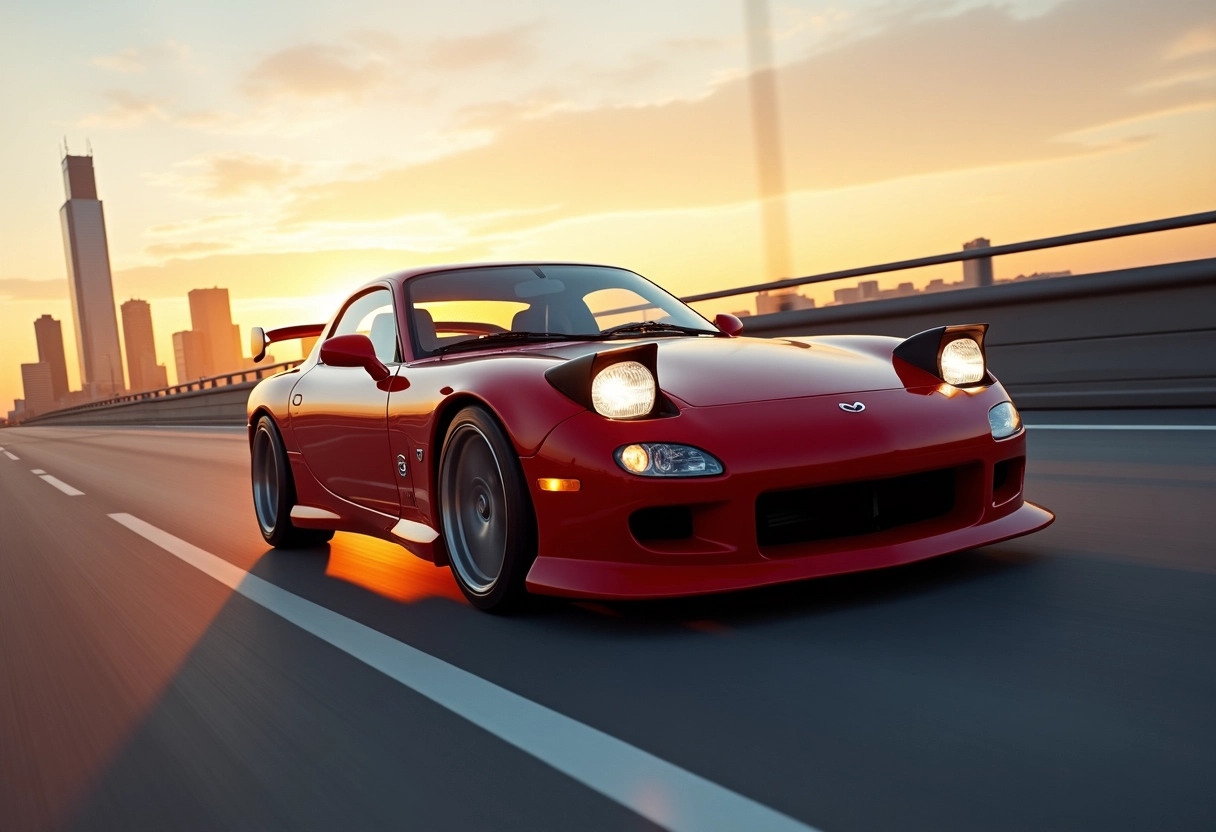
Technical Specifications and Innovations of the Rotary Engine
The rotary engine, often referred to as the Wankel engine, features a distinct architecture compared to traditional piston engines. Invented by Felix Wankel, this engine uses a triangular rotor that rotates in an oval chamber. This design allows for a significant reduction in vibrations and saves space under the hood.
The Technical Advantages of the Rotary Engine
- Compactness: the rotary engine is smaller and lighter than piston engines, improving weight distribution and vehicle handling.
- Fewer moving parts: with fewer components in motion, the rotary engine is theoretically more reliable and requires less maintenance.
- High specific power: capable of producing a large amount of power relative to its size, the rotary engine offers impressive performance.
Innovation and Legacy
The RX-7, equipped with this innovative engine, made automotive history. The FD model, in particular, uses a 13B-REW twin-turbo engine, delivering 276 horsepower. This configuration allowed the RX-7 to compete with the most high-performing sports cars of its time.
The Mazda 787B, also equipped with a rotary engine, won the 24 Hours of Le Mans in 1991, proving the efficiency and robustness of this technology under extreme conditions. The victory of the 787B cemented Mazda’s place in endurance racing history, reinforcing the reputation of its rotary engine.
The RX-8, the successor to the RX-7, continued to use the rotary engine, thus perpetuating Mazda’s technical legacy. Although the production of rotary engines ceased in 2012, their impact on automotive engineering remains invaluable.